How to Store Spore Syringes and Liquid Cultures: A Comprehensive Guide
For both amateur and experienced mycologists, understanding how to properly store spore syringes and liquid cultures is crucial for maintaining viable genetics. Proper storage extends shelf life, preserves potency, and protects the time and money you’ve invested in quality genetics. In this guide we cover refrigeration, the Castellani method, freezing, and a full shelf-life comparison so you always know exactly what you have and how long it will last.
Understanding Spore Syringes and Liquid Cultures
Spore Syringes
Spore syringes contain a suspension of mushroom spores in sterile distilled water. They are the most common way to acquire and store mushroom genetics and are a popular starting point for microscopy and taxonomy research. Spores are dormant — they have no active metabolism — which is what makes them more forgiving to store than liquid cultures.
Liquid Cultures
Liquid cultures consist of a nutrient-rich medium inoculated with active mycelium. Unlike spores, mycelium is alive and actively metabolizing, which makes liquid culture syringes more sensitive to storage conditions. The upside is faster colonization and more aggressive growth when used fresh.
How to Store Spores
- Keep it Cool: The ideal temperature for storing spore syringes is between 2°C to 8°C (35°F to 46°F). Refrigerate immediately after receiving. Avoid temperature fluctuations.
- Darkness is Key: Spores are light-sensitive. Store syringes wrapped in aluminum foil or in a dark drawer away from any light source.
- Minimize Moisture: Store spore syringes upright to prevent moisture pooling at the tip. Make sure the cap is tight and the luer lock is secure.
- Label Everything: Always label with strain name and date of purchase. You will thank yourself later.
- Avoid Frequent Opening: Every time you expose a syringe to open air you risk contamination. Use what you need and reseal immediately.
Properly refrigerated spore syringes remain viable for 6–12 months. Some strains have been reported viable well beyond that under ideal conditions.
How to Store Liquid Cultures
- Refrigeration: Store liquid cultures at 4°C to 8°C (39°F to 46°F). Consistency matters — avoid placing them in the door of the fridge where temperatures fluctuate.
- Airtight and Sterile: Use clean airtight containers. Glass jars with metal lids or purpose-built culture storage containers work best.
- Limit Light Exposure: Store in a dark compartment or wrap in foil. Light degrades culture quality over time.
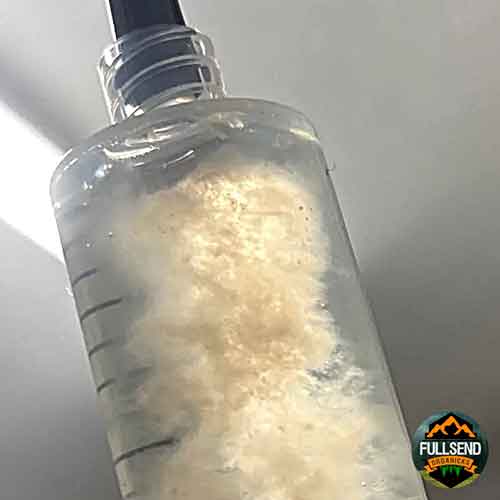
- Inspect Regularly: Healthy liquid culture appears uniformly cloudy white. Any green, black, pink, or unusual coloration means contamination — dispose of it immediately.
- Use Within Timeframe: Liquid cultures are viable for 3–6 months refrigerated. If in doubt, test viability by inoculating an agar plate before committing to a full grain jar.
Complete Storage Guide — Fullsend Organicks
Preserve Your Genetics
Store
Smarter,
Grow Longer.
Shop Fresh Genetics ↓
Pick Your Path
Cultivation
Supplies Spores, liquid cultures, all-in-one grow kits & professional substrates — built for real growers. Shop Mushroom Cultivation and Genetics →
Mushroom
Wellness 6-mushroom functional blend for daily energy, clarity & immunity — made in-house in the U.S. Shop Daily Wellness and Edibles →
Free Shipping On Orders Over $150

"Best mushroom supply company I've come across in 40 years of growing."
— Kasey Wells ★★★★★Get 20% Off
Your First Order
Use code FULLSEND at checkout — valid on all products.
Check your inbox, then use
at checkout for 20% off. Taking you to the shop now...
The Castellani Method: Long-Term Preservation
For mycologists looking to preserve genetics for years rather than months, the Castellani method is the gold standard. This technique suspends spores or mycelial fragments in plain distilled water with zero nutrients, then refrigerates at 4°C. Without nutrients, the culture enters a fully dormant state that can remain viable for 5–10 years when stored correctly. We use this method in-house at Fullsend OrgaNicks for preserving our most valuable original genetics. Read our full Castellani method guide here.
Can You Freeze Spore Syringes?
Freezing is not recommended for liquid cultures. Ice crystal formation physically damages mycelium and kills the culture. For spore syringes, short-term freezing is tolerated by some species but carries real risk of viability loss. Refrigeration at 2–8°C is always the safer and more reliable option. If long-term storage beyond 12 months is the goal, the Castellani method is the only method worth trusting.
Shelf Life Comparison
Spore syringe refrigerated: 6–12 months
Spore print dark dry sealed: 2–5 years
Liquid culture refrigerated: 3–6 months
Castellani culture distilled water fridge: 5–10 years
Frequently Asked Questions
- How do I know if my liquid culture is still good? Healthy LC appears uniformly cloudy white with no color variation. Green, black, or pink tints mean contamination — dispose of it immediately and do not use.
2. Can I store spore syringes at room temperature? Short term yes, but viability degrades faster above 20°C. Always refrigerate if storing longer than two weeks.
3. What is the difference between a spore syringe and a liquid culture for storage purposes? Spore syringes last longer because spores are dormant with no active metabolism. Liquid cultures contain living mycelium and degrade faster — treat them as perishable and use them within 3–6 months.
4. How often should I check stored cultures? Once a month is sufficient. Look for color changes, unusual growth on the surface, or foul smell. Healthy stored cultures should look the same as the day you put them in.
Mush On
Proper storage of spore syringes and liquid cultures protects your investment and keeps your genetics viable for your next project. Refrigeration handles most short to mid-term needs. The Castellani method handles everything else. Whether you are a hobbyist building a personal library or a serious mycologist preserving original isolates, these methods will serve you well.
All of the storage products mentioned in this guide — spore syringes, liquid cultures, and agar plates — are available at Fullsend OrgaNicks. Same-day shipping on all in-stock orders.
Mush Love FULLSEND ORGANICKS